Europe Quietly Changed the Rules for Immigrants in 2026 — And Many People Still Haven’t Realized It
If we’re being honest, the last few months in Europe have felt… strange.
Europe somehow seems to be:
opening up
tightening control
simplifying immigration
and making everything far more monitored at the same time
And many immigrants are already starting to feel it — even if they can’t fully explain why yet.
On the surface, life looks easier:
more online systems
fewer paper documents
digital applications
faster services in some countries
But underneath all of this, another feeling is slowly appearing:
the system is starting to see everything.
And honestly, that may be the biggest immigration shift happening in Europe right now.

The “Folder Era” Is Slowly Ending
People who went through immigration in Europe 5–10 years ago probably remember the legendary document folders.
Copies. Photos. Translations. Paper applications. Waiting lines at 5 AM. Plastic folders carrying half your life inside them.
That version of Europe is slowly disappearing.
Countries like Poland are gradually moving immigration systems into digital platforms and online processing.
And to be fair —for many immigrants, this is actually more convenient.
But there’s a catch.
The old system was chaotic. Slow. Sometimes confusing.
But inside that chaos, people could often “disappear” inside the bureaucracy.
Now the feeling is different:
the system is becoming connected.
Before, You Could “Figure It Out Later.” Now Everything Gets Registered Immediately.
A lot of people still think Europe works the way it did years ago.
The old mentality was:
“I’ll submit it later.”
“I’ll travel for now and fix it eventually.”
“Nobody really understands the system anyway.”
But that reality is fading very quickly.
Europe is moving toward:
digital migration systems
biometric border controls
unified databases
automated checks
synchronized immigration records
And this is no longer theoretical.
The EU’s Entry/Exit System is gradually replacing traditional passport stamps with digital records, biometric registration, and automated border tracking.
For tourists, it may look simple:
“Okay, they scan your face instead of stamping your passport.”
But for immigration systems, this changes almost everything.
The Strange Part? Europe Is Becoming More Convenient and More Strict at the Same Time
This is probably the biggest paradox of immigration in 2026.
On one side:
fewer paper documents
online applications
digital appointments
electronic permits
faster processing in some cases
But on the other side:
every movement becomes more visible to the system.
And many immigrants are only now realizing:digitalization is not just about convenience.
It’s also about control.
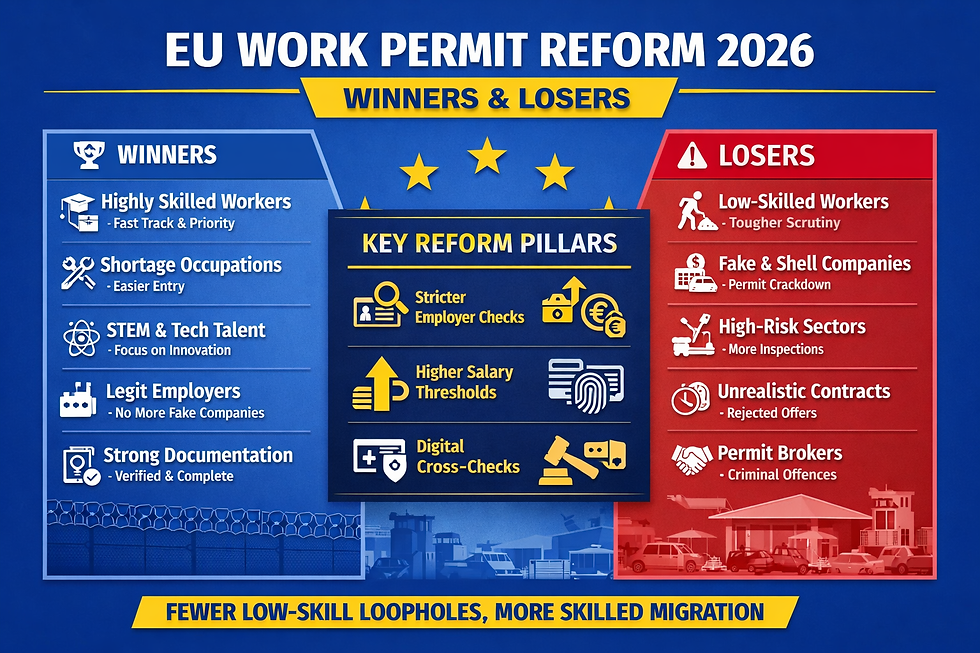
Europe Still Needs Immigrants — Just Not in the Old Way
This is where things become really interesting.
Because if you only read headlines, Europe looks completely contradictory.
One day:
“Europe has massive labor shortages.”
The next day:
“Europe is tightening migration controls.”
But honestly, both things are true.
Europe still desperately needs:
workers
taxpayers
healthcare staff
drivers
builders
IT specialists
long-term residents
At the same time, European governments increasingly want migration to be:
organized, predictable, and transparent.
That’s the key difference.
Europe Wants “Understandable” Immigration
The current direction across the EU is becoming more obvious.
If you:
work legally
pay taxes
follow procedures
have a stable purpose for staying
then many European countries still remain relatively open.
In some areas, immigration is even becoming easier:
simplified work permit systems
digital applications
talent visa programs
combined residence/work permits
But the system is becoming far less tolerant toward:
unclear statuses
endless tourist runs
gray-zone residency
undocumented long-term stays
And honestly —many immigrants are already starting to notice this shift.
Immigrants From “Old Europe” and “New Europe”
One of the most interesting differences today is between immigrants who arrived:
10 years ago
and those arriving now.
Older migrants often remember a Europe that felt:
slower
more flexible
more chaotic
easier to “navigate informally”
The new Europe feels different.
Now the logic increasingly becomes:
“First verification. Then movement.”
And many old migration habits are slowly disappearing:
living indefinitely on tourist stays
constantly changing statuses
delaying legalization for years
existing quietly outside the system
Not because Europe is “closed.”
But because:
the system itself has become smarter.
And This Is Where Many People Start Feeling Nervous
Especially people who built their lives around:
“I’ll figure it out somehow later.”
Because modern Europe is becoming:
less chaotic
less flexible
less invisible
And much more:
digital
synchronized
monitored
automated
Without dramatic announcements,Europe is quietly building a migration system where almost everything leaves a digital trace.
But Here’s the Part Nobody Talks About Enough
Despite all this tightening,Europe still genuinely needs immigrants.
And not symbolically.
Many countries are facing:
aging populations
labor shortages
declining birth rates
workforce gaps
Which is why the EU is simultaneously simplifying some immigration routes for:
workers
skilled specialists
long-term residents
international talent
This is why Europe currently feels so contradictory.
Because two things are happening at once:
Europe wants immigrants.
But Europe also wants much tighter control over migration itself.
The Biggest Changes Are Happening Quietly
And honestly, this may be the most important part of all.
Most of these immigration changes are not happening through dramatic speeches or shocking announcements.
They happen quietly:
new digital systems
updated databases
biometric registration
online verification
integrated migration platforms
And then one day immigrants suddenly realize:
Europe already feels different.
This Is No Longer the Europe Many People Remember
Especially for people who arrived years ago.
The old Europe often felt:
slow
bureaucratic
fragmented
sometimes disorganized
The new Europe feels:
calm, digital, and highly systematic.
Not aggressive.Not dramatic.Not openly hostile.
Just:
more connected
more automated
more transparent
and much harder to “disappear” inside.
So What Does This Mean for Ordinary Immigrants?
Honestly?There’s no reason to panic.
But there is a reason to understand that the old mindset:
“I’ll sort everything out later”is becoming much riskier.
Europe increasingly rewards:
legal clarity
long-term planning
transparent residency
stable immigration paths
And for many law-abiding immigrants,some of these changes are genuinely more convenient.
But the era of “gray-zone flexibility” in Europe slowly seems to be ending.
Reality Check
People still argue online:
“Is Europe opening or closing?”
But honestly,that’s probably the wrong question.
Europe is not ending immigration.
Europe is rebuilding how immigration works.
Not banning it.Not stopping it.Not “closing the borders.”
But transforming migration into something:
digital
monitored
organized
and far less chaotic than before
And honestly,this new version of Europe is probably here to stay.


Komentarze